by Scott Liddicoat (not AI)
Love democracy? Real democracy? You’ll love this!
Why it took me almost seven decades to figure out how true democracy could be implemented here in the United States I’ll never know. Let me introduce TDF. Especially, let me introduce the thinking behind it
Nuts and Bolts
The idea came to me while listening to the radio. Two people were discussing the merits of government assistance for first-time home buyers.
First-time home buyer assistance usually offers low-to-no down payment assistance. It may make grants available to cover closing costs. Some programs may provide forgivable loans if the borrower meets certain conditions over time.

Downsides to this taxpayer funded program? With low-to-no downpayment, first-time home buyer loans come with higher interest rates. These loans cost more over time. Borrowers default at higher rates.
But I’ll call out another downside and it’s critical. It’s never talked about and certainly wasn’t discussed on the radio.
Funding this program with my taxes is a financial risk to me. I’m retired. Over time, inflation has steadily decreased my (fixed) income with higher and higher prices. Since no one can forecast inflation into the future, I need to shepherd my money now. So, first-time home buyer assistance is not a program I support. Why should I be subsidizing others when my financial security is at risk?
This is where some clever thinking on my part kicked in. You and I could “vote” on the matter of first-time home buyer assistance if things were set up this way.
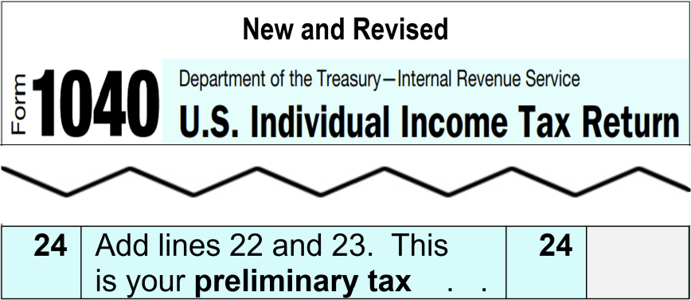
First, we’d subtract the full cost of the First-time Home Buyer Assistance Program from the federal budget. Our taxes would then be reduced, based on a smaller budget. On a new and revised Form 1040, we could call this reduced number our Preliminary Tax. Here’s how it might look:
Just below this on our revised tax form two new lines would be added. They might read like this:

And then, below that:

In the box to the right, every taxpayer would enter the number they believe they should direct to the first-time home buyer assistance program. Plainly, I’d enter a zero. Or maybe a small number. But dedicated supporters of this program would just as plainly enter a healthy number.
Americans are the most generous people on earth. First-time home buyer assistance benefits would overflow with contributions from those who believe in it if it’s worthwhile and beneficial. And if contributions were minimal, who could claim that the program was a good idea in the first place?
Funded this way, you and I would be “voting” on the program with our voluntarily directed contributions. Whether it ended up with a small, medium, or large sum, first-time home buyers could apply for proportionate aid from a fund that was financed democratically. Everyone benefits. No one is harmed. It’s simple. And it’s the perfect civil and democratic solution.
That’s the Taxpayer Directed Funding program. That’s TDF.
Giving Credit Where Credit Is Due
I can’t take full credit for this wonderful, democratic idea. I was inspired by what we already do on the Wisconsin Income Tax Form. On it, you can contribute to any one of eight different programs represented on the form, below.
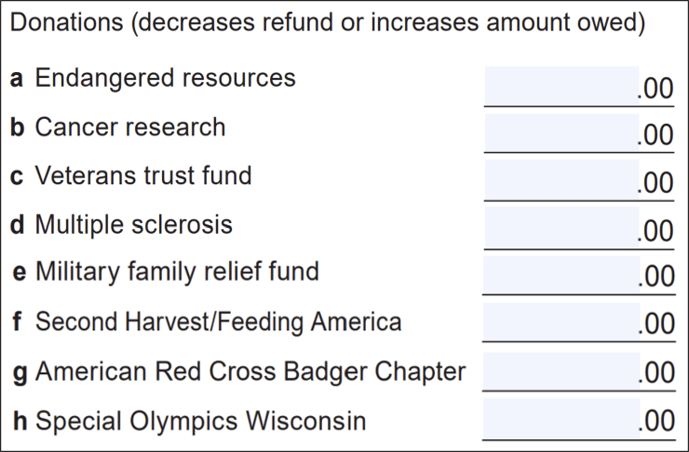
It works voluntarily, democratically, and perfectly in Wisconsin, and just as I’ve described above. I say let’s place first-time home buyer assistance on our federal Form 1040 and pay for it in a similar way.
Extending the Program
But once we’re up and running, we can think more expansively. We can extend TDF’s voting and funding power to other government programs. You and I could make more democratic decisions.
Here’s a program I’m predicting lots of people would like to decide and vote on. Maybe you’ll agree with how I’d fund it.
Further below Voluntary Additions to Your Tax, another line could be added to our revised Form 1040:

Again, we’d subtract bailout funding from the federal budget. Our taxes would be reduced further. Then we “vote” for (or against) bank and corporate bailouts with our voluntary, directed contributions. Ordinary Americans can assess the issue just as well as the politicians and economic “experts.” Probably better.
The arguments for bailing out big, failing companies? Inaction could trigger a “domino effect, pushing the economy into recession or depression. Bailouts can provide support that may help to prevent mass layoffs.
But bailouts signal that government will always step in when bad risks or bad decisions lead to failure. Directors and managers of big companies come to believe they’re immune to the financial discipline required in a free market economy. Besides, insolvent or poorly managed businesses are supposed to fail. Fail so they can be purchased, reorganized, and relaunched under better, stronger leadership.
Personally, I take a dim view of funding bank and corporate bailouts with my tax dollars. Why should I pay large sums for a failing company’s financial security when mine is at risk? My TDF contribution here? A. Big. Fat. Zero.
But if government bailouts are worthwhile and beneficial, the Treasury will overflow with voluntary contributions from those who believe in them. And if contributions are minimal, who could claim that bailouts make sense? Failed banks and corporations can still soak up whatever TDF contributions are available. Everyone benefits. No one is harmed. As before, it’s the perfect civil and democratic solution.
Extending Further
But the story gets even better. We could follow the TDF process with even more government-financed programs. Here’s another example:

Most people know the typical pros and cons for government subsidized day care. This is an issue where my Voluntary Contribution amount might be sizable.
But in the last two years we’ve all seen the enormous fraud and waste connected with government day care programming. For now, I’d have a hard time contributing money to government subsidized day care.
It would probably be beneficial if many people “voted” the same way. Government servants would quickly learn that you and I are holding them to account for their negligence. We won’t tolerate poor administration or criminal mismanagement of our tax dollars. Those who deeply believe in government day care would have to join in a push for real accountability. That, or pony up a lot more cash to support these programs as they’re currently run.
And that’s as it should be. Those who believe in programs like this should pay more for them than those who don’t.
Eligible day care programs could still access whatever money is available after all TDF contributions are made. Once more, everyone benefits. No one is harmed. It’s the perfect civil and democratic solution.
Extending Even Further
I’ll bet lots of taxpayers would like to vote with their dollars on my last example. This is a quietly funded government program:

Let’s follow the TDF process. Subtract out of the budget all funding for confidential settling of congressional workplace misconduct, harassment, and abuse cases. Then decrease our taxes by that amount. Finally, put it on the form for taxpayers to “vote on” with their voluntary contributions. My contribution? Another. Big. Fat. Zero.
But if the fund has merit, it’ll overflow with voluntary contributions. If not, who could make the claim that taxpayers should fund it? You’ve heard it before. It’s the perfect civil and democratic solution.
Democracy, Dollar by Dollar
You don’t need a microscope to read between the lines of the Taxpayer Directed Funding program. Full on Democracy—one man or woman, one vote—could be applied to government funding of many, many more things. A clear reading of our Constitution shows the Federal Government is limited to authorizing, funding, and managing the following responsibilities:
- National Defense: Raising and supporting armies, providing a navy, and organizing the militia.
- Essential Federal Operations: Funding the President, the federal judiciary, and the legislative branch.
- Specific Economic Powers: Coining money, setting weights and measures, and regulating interstate/foreign commerce.
- Institutional Infrastructure: Establishing Post Offices, creating federal courts, and exercising exclusive authority over the District of Columbia.
Beyond these constitutionally enumerated tasks, everything else could be ours to decide on democratically. Everything else! Wouldn’t it be great?
A Question Needing An Answer
This discussion should cause you—should cause everyone—to consider a weighty question.
Should programs outside the limits of the constitution be funded voluntarily?
My answer is unquestionably “Yes!” We the People are perfectly qualified and capable of deciding which of these government programs deserve attention and which don’t measure up.
Given a choice, I’m willing to support many things.
But I’m not willing to fund any government department, agency, or program spending millions to promote tourism in Egypt and Tunisia. Or spending millions to distribute oral contraceptives and condoms in Afghanistan. Or foreign Sesame Street productions. Or “girl-centric” climate action in Brazil.
I wouldn’t fund any government department, agency, or program spending billions on unused office space. Or billions to pay federal workers to stay home while under investigation. Millions to research a “smart” toilet that analyzes “anal prints”. Millions for a Las Vegas Pickleball Palace. Or even half a million to study whether taking selfies boosts mood.
Consider the last two paragraphs again, realizing that many more examples could have been added. Review the Constitution. Then look at our national debt and its trendline.
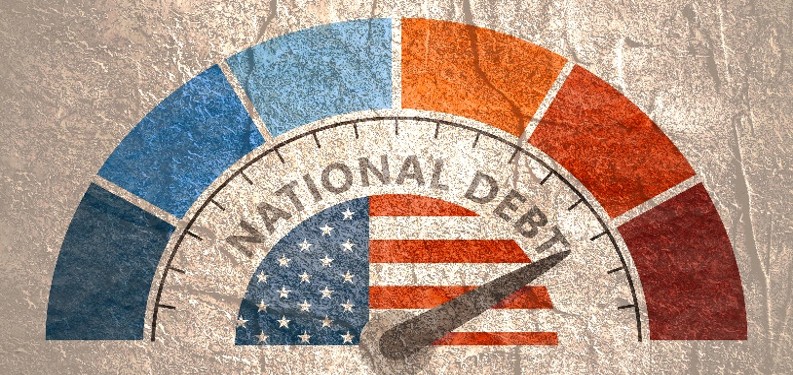
I want Democracy, Dollar by Dollar, and all of the benefits that come with it.
TDF: The Natural Benefits
Overnight, Federal agencies would become answerable and accountable to their constituents—We the People. Fearing loss of support, they wouldn’t recommend funding for any program that was frivolous or inefficient. Funding that went off the rails would have to be fully explained and accounted for. Or lost. Government programs would have to advertise how they intend to spend our money, and in the most transparent way. They’d also have to advertise a budget and provide the recommended TDF contribution to cover it.
More natural benefits? Improved attention and funding for programs that deserve it. Diminished attention and funding for programs that don’t measure up.
TDF: The Likely Benefits
Costs kept down. Effectiveness and efficiency continuously promoted. And not to be overlooked, a Federal Government focused on its true (and limited) responsibilities.
A realistic chance for a balanced Federal budget—or a way better chance at one. A smaller Federal government—or a far better chance for one. More freedom for American citizens—or a much better chance for it.
In a Few Words
We all deserve Taxpayer Directed Funding.
I trust ordinary people to decide how programs beyond the limits of the Constitution should be funded. We are better equipped to make those decisions than politicians are.
Postscript
In case you didn’t think of it on your own, there’s a method that’s even better than TDF.
It’s just as democratic. It has all of the benefits. But it’s much more direct and even more effective.
Wouldn’t it be all the better for government to stop running optional programs entirely? You and I could then fund them without force in a completely free and voluntary market.
TDF or free market. Either way, the choice is unmistakable: should government take your money for programs you may not believe in, or should free citizens decide what deserves their support?
Each free citizen casting their own funding “vote.” That’s real Democracy, Dollar by Dollar.
 SaltwaterTea