
Scott Liddicoat
It’s a simple four word conversation that usually tells you everything you need to know. I always anticipate my chance to share in it. And I enjoy participating in it. Every time.
But when these four critical words aren’t exchanged, it’s probably not a good sign. The absence of these words frequently means you’re dealing with government. They’re not spoken where government does its work because government just doesn’t get it right.
So, what are the four critical words? And where do you use them? Where do you hear them?
You’ve just paid for something you bought. The cashier turns to you and says, “thank you!” In return you reply, “thank you!” This four word dialogue takes place millions of times every day in shops and stores across our country. You’ve probably participated in it many times. It’s special every time I’m part of it.
The cashier is usually smiling. Most people suppose they’re saying, “thanks for shopping here” and “please come back.” You’re smiling too. You’re expressing, “got my stuff.” “Thanks for the help today. ”But that brief conversation goes much, much deeper.
The cashier, representing the store, is thankful for the money you paid. The store values the money you paid more than they value the items they sold. Otherwise they wouldn’t have made the sale. The store benefits.
You, the customer, are thankful for the items you purchased. You value the items you purchased more than you value the money you paid for them. Otherwise you wouldn’t have made the purchase. You benefit.
Nothing like this ever happens in matters of government. Have you ever thanked the government for taking your taxes? Has a politician or bureaucrat ever thanked you for the taxes they took? Has a receiver of government money ever stepped up and thanked the taxpayers? Has there ever been a government transaction where the parties involved fully and mutually benefited? If so, it hasn’t happened often. The reason for this? Government is a zero sum enterprise. A zero sum situation occurs when the gain by one person exactly equals the loss suffered by another person.
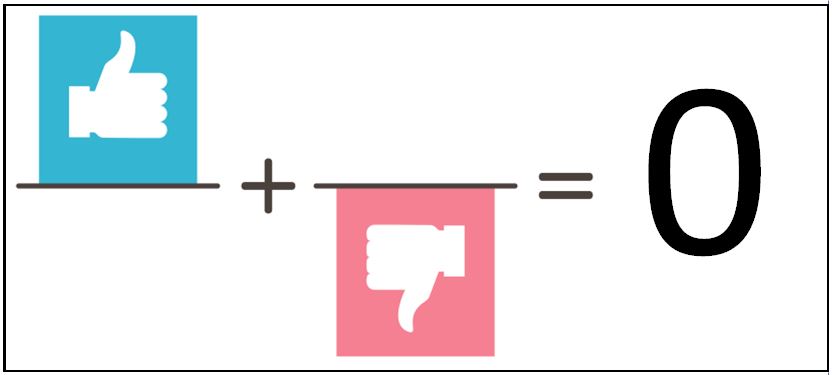
In a zero sum situation, there is no overall change in benefit. There are simply winners and losers.
Contrast that with what you and I do just about every day. When we buy, we participate in non-zero sum transactions. They’re voluntary exchanges. We have many products and services to choose from. We can walk away from any purchase we’ve decided against for any reason. Our purchases always represent the best possible use of resources because we get exactly what we want at a price we are willing to pay. And when we make a non-zero sum purchase, we benefit and so does the seller.

There are winners, and then there are more winners. That’s why the seller usually says thank you. As buyers, we usually say thank you in reply.
Government dealings offer few (if any) of these benefits. They suffer from all the defects of every zero sum transaction. Government makes winners of some people and losers of other people.
Whether it’s bank bailouts, student debt cancellation, high speed urban rail services, subsidies to grow (or not grow) certain crops, or supporting smart toilets, there are always winners and losers.
Sadly, the worst losers are usually the poor. And sometimes there are only losers. Government is the biggest waster of wealth and resources on the planet.
We should all be mistrustful of politicians and the government when they take our money and spend it on their interests. Good government is government that is limited in scope and limited in its ability to tax and spend. The world is made worse when government takes our money and makes other people winners with it.
Instead, we should all celebrate everything we buy in a genuinely free market. As individuals, when we spend money freely on what we value and know is important, everyone wins. Even more, our purchases quickly and effectively go on to shape the future. Producers take notice and make more of what is valuable to us. They make less of what isn’t wanted and needed, which saves on wasted resources. They innovate and work to keep costs down to earn the privilege of serving us—the customer—every day. This is why with each purchase we make, however large or small, we make the world a better place.
Just listen for the four critical words. They tell you everything you need to know…


Saltwatertea.org January, 2023
 SaltwaterTea