
Lots of people won’t like reading this. I say tough.
Scott Liddicoat
In both February and April, I had the privilege of officially facilitating the voting process in several Green Bay senior care centers. For those who don’t know, this is done every election for citizens who’ve requested a ballot but cannot easily leave a care facility to vote. Through City Hall, two SVD’s follow specific guidelines to make sure the process is conducted fairly and impartially.
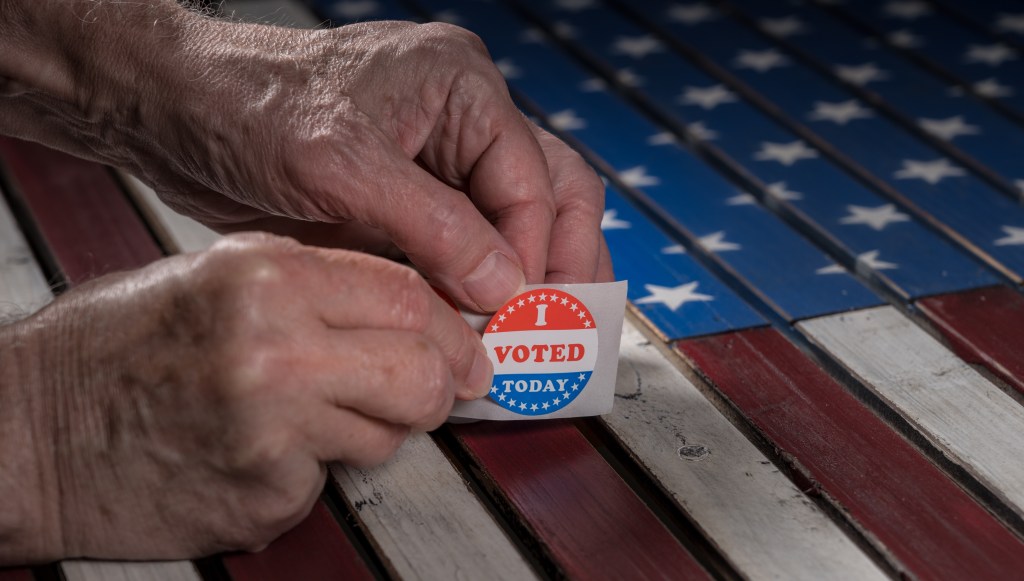
I do it for three reasons. One, it’s a way to contribute to the fair administration of elections. Two, I‘m supporting those who’ve led a full life and want to continue voting. It is, after all, the most hallowed of our country’s rights. And three? I’ve got what it takes. A little bit of time. Some patience. And I have the mindset to perform this task not as a Democrat or Republican. But as a fair-minded American.
There were some sad moments during these visits. And to be sure, there were disappointments. But there were plenty of fun, inspiring incidents, too.
Like the nun who engaged me for a few moments after voting. Somehow she’d divined that I attended a Catholic elementary school. With a mischievous smile, she explained how she knew I had to have been a troublemaker during those years. Despite my best efforts and my own playful smile, there was no convincing her otherwise.
Responsible
There were ordinary, but inspiring occurrences. Residents who wanted to vote in the worst way. But they were better motivated to vote responsibly. Over and again, voting residents asked if it was acceptable to not vote for anyone in a race. This was a common question from voters new to a facility who didn’t know local candidates yet. But they felt they were being negligent if they didn’t vote the entire ballot. They were looking for reassurance that it was permissible to make the responsible choice to skip a race. This in the belief they shouldn’t vote for candidates they didn’t know at all.

Informed
On the flip side of this was a woman who brought with her a folder that was filled one-half inch full of papers. On top was a sample ballot she’d completed. The papers below? Computer printouts from each candidate’s website, annotated and highlighted. She eagerly told us about her preparations before declaring she was here to VOTE! As we reviewed the necessary instructions, her impatience was clear. I’ve always thought of myself as an informed voter. But compared to her, I was thoroughly outclassed.
Devoted
Then there was the veteran who had to be wheelchaired to the activities room to vote. Upon arrival at the door, he insisted on wheeling himself in the rest of the way. He’d been helped into his Sunday best outfit, was clean shaven, and wearing his lieutenant’s garrison cap. He had trouble speaking, but there was no mistaking the upright posture he took on and the salute he offered.

Not having served, I felt a hint of embarrassment saluting back. But I was happy—and inspired—to give him his voting instructions. Then I gave him the space he needed to confidentially perform his very sacred right.
Responsible. Informed. Devoted. We should all be such good Americans!
However, in the April 7th spring election not so many were. Wisconsin is currently home to 4.8 million adults of voting age. Among them, only 1.5 million, or 31%, voted.
That means 2.1 million registered Wisconsin voters didn’t bother to show up. Add to them the 1.2 million unregistered voters who abandoned their right to vote. That’s 3.3 million Wisconsin adults of voting age who turned their backs on the most sacred of our American institutions, the right—the responsibility—to vote.
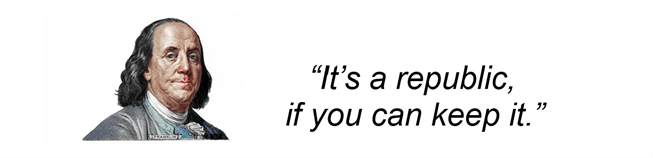
No one should need this reminder. If we are to maintain the freedoms inherently ours in this great American Experiment, we citizens need to vote. Responsible citizens. Informed citizens. Devoted citizens. It’s a requirement for free and self-governing people to participate in the political life of their nation. Either that, or lose it to political, bureaucratic, and judicial tyranny. Participation is the only way a government deriving its just powers from the consent of the governed can survive.
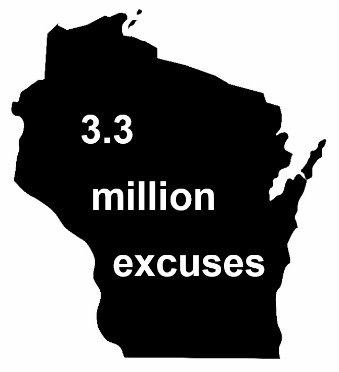
There are very few excuses among the 3.3 million excuses for failing to vote that would satisfy the residents I assisted at care facilities in April. If you’re among the 3.3 million, try coming up with one. Good luck. You’d be cut off mid-sentence and given a stern lecture instead. It might sound as simple as this:
Do your job.
Scott Liddicoat
April, 2026

