Scott Liddicoat
Reader Beware:
A bait and switch ending awaits you!
Introducing Tariffs:
Isn’t it astonishing how tariffs have become the rage? Just as astonishing is to hear the subject of tariffs being discussed among politicians and the media with economic accuracy.
In American terms, a tariff is a tax on foreign-made products imported into the United States.

Notably, neither foreign governments nor foreign businesses pay the tariff tax. Rather, American businesses pay the tariff on goods they import. Their payments are made directly to the United States Federal Government.
Tariffs Come with Problems
As has been accurately pointed out by many, the cost of tariffs is always passed on to consumers.
American importers paying the tariff tax are faced with a higher cost of doing business. Both common sense and basic economic reasoning take us to the next step in the process. Faced with higher costs, American importers raise prices on the goods they sell in the U.S. In essence, American citizens pay the tariff tax through the price inflation it causes.

Tariff critics who are often Democrats these days, also remind us that tariffs may bring other problems along with them. And it’s not uncommon for them to mock conservatives in favor of tariffs as anti-business or anti-free enterprise. But American consumers paying for tariffs in the form of price inflation are usually the first and primary casualties of tariff taxes.
The Case for Tariffs
President Donald Trump acknowledges these problems can happen. But he still advocates for the use of tariffs. He has two reasons for this.
One reason is to apply economic leverage, instead of force or the threat of force, over some foreign governments for political ends. Famously, he threatened Colombia with a 25% tariff unless they repatriated violent criminal illegal aliens that came from their country. It didn’t take long for Colombia to yield. Colombian businesses want to be able to sell their products in our country competitively.

The second reason hasn’t been used in the U.S. for years. President Trump would like to have more of the funding for federal government activities fall upon tariffs. This would reduce income taxes in the process.
Tariff funding of government he reasons, will also invite American economic growth. With lower income taxes, American consumers will have more money to spend. They’ll be encouraged to “Buy American,” spending their money on comparatively less expensive U.S. made products. To escape the tariffs, some foreign companies may choose to open new plants in our country.
Are Both Sides Right?
So, who’s right in the tariff controversy? Maybe everyone is right.
It remains to be seen how much of government funding President Trump can transfer to tariff taxes. But he’s already proven the threat of a tariff can be an effective negotiating tool in many instances.
Tariff critics have correctly and effectively articulated their argument as well. The application of tariffs results in American consumers paying the tariff tax.

The result in this drama may be a compromise between economic consequences and political marketing. This isn’t unusual in our system of government. What’s been unusual is to hear how accurately nearly everyone has discussed the issue.
The Take Home
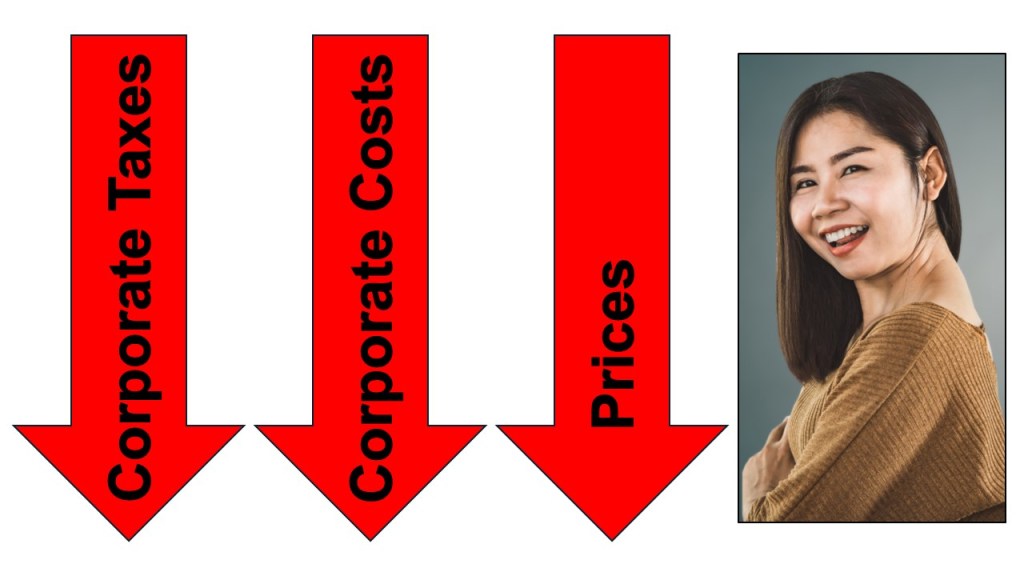
When a tax of any kind is imposed on a business, business costs rise. The increased cost is always passed on to consumers in the form of higher prices. Consumers paying the inflated prices end up paying the tax. It would be well for all of us—politicians and the media especially—to remember this cause-and-effect relationship.
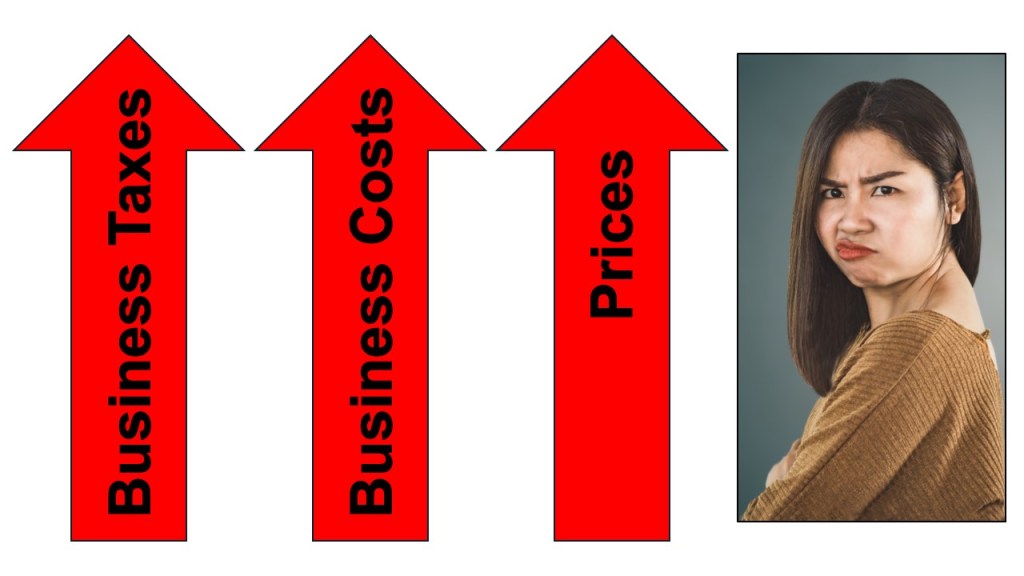
Remember it when politicians talk about increasing corporate taxes. You and I will pay the increased corporate taxes through higher prices.
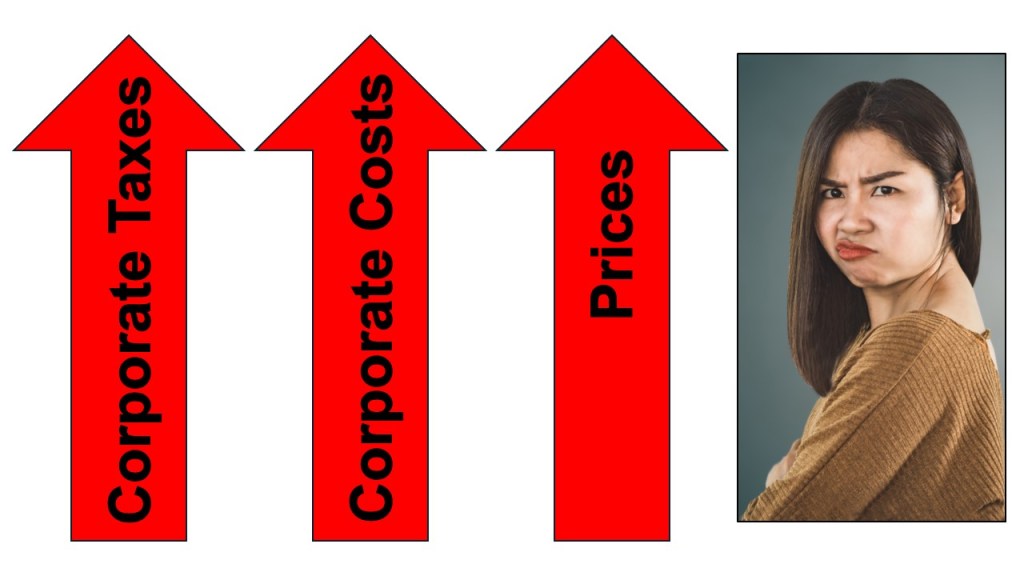
Remember it when politicians talk about cutting corporate taxes. You and I will benefit from the lower prices that result.
 SaltwaterTea