
by Scott Liddicoat
(who is still doing book reports at almost seventy years old)
________________
Much of the information that follows is from
MIG Pilot The Final Escape of Lt. Belenko by John Barron
________________
Quotes from author John Barron are made in italics.
Quotes from Viktor Belenko are cited in bold italics.
MIG Pilot…
…was required reading for our sons growing up. The Final Escape of Viktor Belenko is a compelling story of personal heroism and triumph. But it was essential reading for our boys for another, much more important reason. It’s a story of unsurpassed American liberty and resourcefulness.
Truth is, no coercion was needed to get them to read it. It’s such a remarkable story!
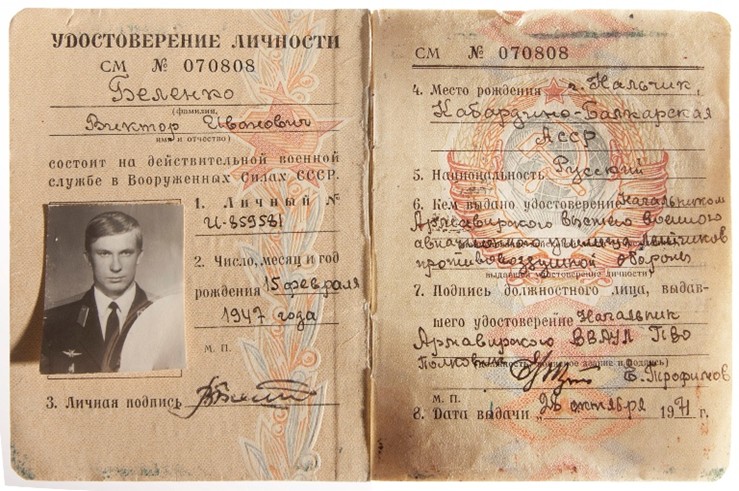
What Happened?
If you’re old enough you might remember the event as it took place. Russian air force Lt. Viktor Belenko—the model “New Communist Man”—surprised everyone in 1976. While on routine training exercises he flew his MIG 25 Foxbat off course and headed for Japan. Not long after, he executed an emergency landing at Japan’s Hakodate airport.
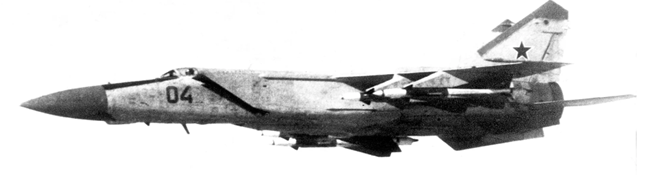
Exiting the Foxbat, he immediately requested Japanese protection and asylum in America. Asylum was granted by President Ford one day later.
The Reaction
American officials were astonished. The MIG 25 Foxbat was the newest and most feared Soviet interceptor aircraft. It was flown by only the most skilled and trusted Russian pilots. Its capabilities and technology were completely unknown outside the USSR.
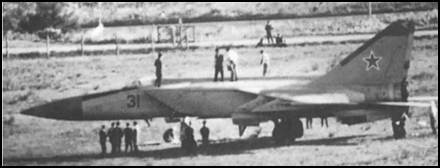
American and Japanese officials took a full ten weeks to study the Foxbat before returning it to the Soviet military.
Perhaps even more important was what Belenko told them. He provided insight into the aircraft that only a pilot could offer. But Belenko was also able to supply American officials with an invaluable understanding of Soviet military thinking, training methods, and tactics. It was all a completely unexpected bonanza.
If American officials were astonished, Russian officials were stunned! Viktor Belenko was the living embodiment of “The New Communist Man.” He was the son of a broken, working class family. Nevertheless, he rose to become one of the best and most trusted Soviet pilots through hard work, resolve, and natural talent. He was good looking, well paid, and afforded privileges few could match in Communist Russia.
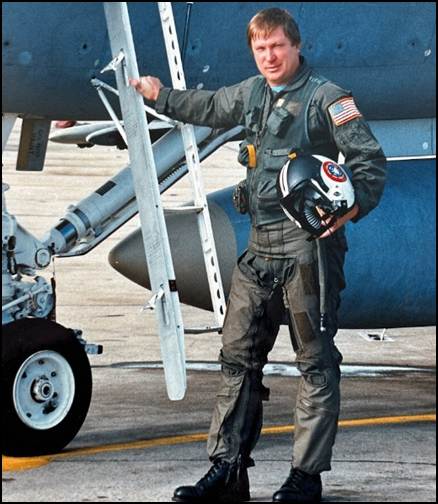
Belenko was held up as a clear sign that communism worked. That the Union of Soviet Socialist Republics could produce—was producing—superior human material from even the most humble means.
Soviet officials scrambled for an explanation that would require Belenko’s return to the USSR. They claimed Belenko’s jet malfunctioned, he was forced down, then arrested and drugged. They claimed that perhaps he endured some kind of sickness or emotional breakdown and now was being held against his will. They brought weeping relatives in front of cameras to plead for his return. He couldn’t have deserted his motherland. No one had seen anything to suspect Viktor Belenko might defect.
Unlike so many others in the Soviet Union though, Belenko had both the means (his MIG 25), and opportunity (training exercises within fuel range of northern Japan) for escape. The trouble for Russian officials was that they didn’t know their man.
Why Did He Defect?
What drove Belenko, the USSR’s trusted New Communist Man, to bolt on September 6th, 1976? What drove him, in his words to, …try to hurt this [the Soviet] system as badly as I can. I will try to give the Dark Forces [America] what this system most wants to keep secret from them. I will give them my plane and all its secrets.
The easiest way to think about it? Viktor Belenko was the perfect American citizen born into perfect Communism. He was and had always been, a strong individual. Exposed to systemic lies throughout his life in the USSR, Belenko was forced to lie to survive—and finally, to escape. He had to get out of the USSR.
See Things For Himself
One of the personality traits he possessed had served him well. And it would continue to serve him well. He’d learned he had to see things for himself to believe them. Everything he saw in the USSR was wrong. Or backwards. Almost everything he saw was a lie.
But what about America? Throughout his life Viktor Belenko had been programmed with the idea that America was the “Evil Empire.” It was filled with corrupt politicians, gangsters, criminals, and the like. From his indoctrination, he didn’t just believe this. In every part of his heart and mind, he knew it to be true. One can only imagine how desperate he must have been to leave the only life he knew, a great life by Soviet standards, for the evil empire of the United States. His new life in America would enable him to discard the lies and learn the truth—by experiencing it.
But his brainwashing took time to overcome. It came slowly through occurrences you and I consider ordinary. I’ll review three ordinary for us, but especially compelling, thought-changing experiences from MIG Pilot that transformed Belenko.
Not the People He Met
None of these experiences were specific to the people he met. Understanding commonplace behavior in a free society would be a prolonged process for Belenko. For example, in Japan he knew he was being “handled” by political authorities. He noted that his Japanese and American handlers lacked the guile of the Russian counterparts he knew so well. He believed the genuine and relaxed nature of his handlers to be a new kind of cunning he’d never seen before. It took him an enormously long time to understand something that we all know. Free people, by their nature, talk, behave, and interact with others much differently than those living under the repressive weight of Socialism or Communism.
No, his transformation was not tied to specific people. It was connected to ordinary, see it for yourself experiences like these.
1. Viktor Flies Again
To rethink his programming Belenko had to see for himself that he’d been programmed, and that his programming was flawed. More than anything he had to see this in things he knew well. And what did he know best? Aircraft.
Three days after defecting, he was on his way from Japan to the United States in a 747 passenger jet. From MIG Pilot:
Inside, Jim, the Embassy officer, led Belenko into the coach section, and nobody paid any
particular attention to them. As they took off, Jim patted him on the shoulder, “You’re on your way.”

As Belenko had never seen a wide-bodied jet, its quietness and size amazed him, and he felt as if he were in an opulent theater.
The captain admitted Belenko to the flight deck and for nearly an hour, with Jim interpreting, answered his questions about the 747, its equipment and life as a commercial pilot. Belenko simply did not believe that only three men could manage an enormous plane, though they carefully showed and explained how they could.
The rest of the crew is hidden somewhere. But if it’s their job to fool me and impress me, I’ll let them think they’ve succeeded.
Shortly after landing in Los Angeles, Belenko was whisked away to a private jet for the trip to Washington DC.
The executive jet was to him a masterpiece of design, maneuvering as nimbly as a fighter while outfitted inside like
an elegant hotel suite. Well, I knew they were rich and built good airplanes.
Belenko had been the pilot of a MIG 25, the newest and most sophisticated aircraft in the USSR. But it wasn’t an easy or comfortable aircraft to fly. He had a hard time coming to grips with what he was seeing in person.
However, you and I know very well what he was seeing. We have no trouble coming to grips with it. Belenko’s deprogramming was simply experiencing what we expect and consider to be ordinary. You and I expect air travel to be courteous, comfortable, and we take customer service for granted. We expect the best technology and the best trained pilots and support personnel. This was a new experience for “The New Communist Man.” It would take time for him to see this experience as we do—ordinary.
2. A Visit to the Grocery Store
Our second anecdote is really telling. After arriving in the DC area, Viktor’s handlers, Peter and Nick, slowly began acquainting Belenko with American life. At times not fast enough for him, though. He wanted to see for himself how everyday Americans lived. So, at the first reasonable chance, he insisted on going into a grocery store.
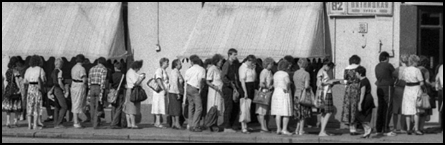
Belenko knew all about buying food in the Soviet Union. Limited choices, very limited. Dirty food bins. Plenty of spoiled food and the smell that accompanied it. And frequently, long lines in wait to get in.
Here’s how Belenko reacted upon his first visit to an American grocery store.
They stopped at a shopping center on the outskirts of a small Virginia town and headed toward a clothing store, but Belenko insisted on inspecting a supermarket on the way. He noticed first the smell or rather the absence of smell; then he explored and stared in ever-widening wonder. Mountains of fruit and fresh vegetables;

a long bin of sausages, frankfurters, wursts, salami, bologna, cold cuts; an equally long shelf of cheeses, thirty or forty different varieties; milk, butter, eggs, more than he had ever seen in any one place; the meat counter, at least twenty meters long, with virtually every kind of meat in the world—wrapped so you could take it in your hands, examine, and choose or not; labeled and graded as to
quality. A date stamped on the package to warn when it would begin to spoil! And hams and chickens and turkeys! Cans and packages of almost everything edible with pictures showing their contents and labels reciting their contents. Long aisles of frozen foods, again with pictures on the packages. And juices, every kind of juice. Soaps and paper products and toiletries and much else that he did not recognize. Beer! American, German, Dutch, Danish, Australian, Mexican, Canadian beer; all cold. Nobody doled any of this out. You picked it out for yourself and put it in fancy, clear little bags and then in a big expensive cart. It was all just there for anybody to take.
Never had Belenko been in a closed market selling meat or produce that did not smell of spoilage, of unwashed bins and counters, of decaying, unswept remnants of food. Never had he been in a market offering anything desirable that was not crowded inside, with lines of people waiting outside.
Always he had been told that the masses of exploited Americans lived in the shadow of hunger and that pockets of near starvation were widespread, and he had seen photographs that seemed to demonstrate that.
If this were a real store, a woman in less than an hour could buy enough food in just this one place to feed a whole family for two weeks. But where are the people, the crowds, the lines? Ah, that proves it. This is not a real store. The people can’t afford it. If they could, everybody would be here. It’s a showplace of the Dark Forces.
I congratulate you, Belenko said during the ride back home. That was a spectacular show you put on for me.
What do you mean? asked Peter. I mean that place, it’s like one of our kolkhozes where we take foreigners. [An artificial, bountiful collective farm created as a showplace for foreign visitors, designed to produce a false impression of life in the USSR.]
Nick laughed, but not Peter. Viktor, I give you my word that what you’ve just seen is a common, typical shopping center. There are tens of thousands of them all over America. Anywhere you go in the United States, north, south, east, west you will see pretty much the same.
Of course, we all know what Nick and Peter knew, and what they told Belenko. But we don’t have warped beliefs that need reshaping. We expect every supermarket we’ll ever set foot in to be like the one described here. It’s all we’ve ever experienced in America.
3. Viktor on the Farm
I’ll let John Barron’s masterful authorship and Belenko’s poignant commentary from MIG Pilot tell this story in its entirety.
Upon completion of the formal debriefings of Belenko, which lasted roughly 5 months, General Keegan commented: “The value of what he gave us, what he showed us is so great that it can never be measured in dollars. The people of the United States and the West owe him an everlasting debt. He grew up in a brutal, bestial society. In the military, he lived, despite his elite status, in a moral junkyard. Yet he came out of it as one of the most outstanding young studs, one of the most honest, courageous, self-reliant young men I have ever known…
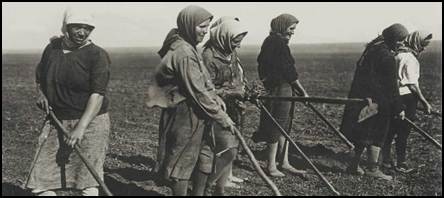
Partly consciously, partly unconsciously, Belenko determined to explore the United states through Soviet eyes, to assess it according to all he had been taught in the Soviet Union. Though already persuaded that much of what he had been told was false, he thought that the Dark Forces had exposed him only to the best and that he should first examine the worst. The worst in the Soviet Union, outside a concentration camp, was a farm so he announced that he wished to work for a while on a farm.
Someone in the CIA, through a friend, steered him to a family farm more than half a continent away from Washington. Yes, they needed a farm hand, and they would be pleased to take a young Russian and tell nobody he was Russian, provided he was able and willing to work just like anybody else at standard wages.
Belenko arrived by bus at the farm in the late afternoon, and the owner, Fred, his wife, Melissa, and partner, Jake, greeted him on the front porch of the large frame farmhouse painted white with green shutters. Supper, as they called it, was waiting, and after washing, he joined them and their three children around along oak dining table laden with country food—pickled ham, relish, veal cutlets, corn on the cob, fresh green beans with onions and new potatoes, hot biscuits, iced tea, and peach cobbler with whipped cream. Always, in a new social situation, Belenko watched what the Americans did and tried to emulate them, so when they bowed their heads, he did the same. Fred said a brief prayer, and Belenko did not understand it all; But one sentence touched him: “Bless this home, our family and he who joins us.”

Heretofore Belenko had thought that corn on the cob was fed only to livestock, and he tasted it with reservation. This is good! I wish I could send some to hell for Khrushchev. All the food was good. His conspicuous enjoyment of it pleased Melissa, and the knowledge he exhibited during talk about farming pleased the men.
He had heard about it; he had read about it; he had glimpsed signs of it from roads and the sky. But Belenko had to experience the efficiency of an American farm to comprehend. His understanding began in the morning as Fred showed him the equipment—a tractor, combine, harvester, machinery for seeding, irrigating, fertilizing, an electronically controlled lighting system that caused hens to lay eggs on schedule, automatic milking devices, two cars, a large pickup truck…
In a few days Belenko deduced that beyond mechanization, there were two other reasons that enabled Fred, his wife, their children, Jake, and one laborer—himself—to work the farm embracing several hundred acres of cultivated land plus pasture and woodland. Fred and Jake knew about every scientific aspect of farming—veterinary medicine, fertilization, use of pesticides, crop rotation, irrigation. For almost 20 years they had kept meteorological records so they could make their own weather forecasts. They could service and repair all the machinery themselves. Along with Melissa, they were accountants and salesmen. And they worked, hard, carefully, enthusiastically, from sunrise to sunset, taking off only Sunday and sometimes Saturday afternoon. They treat this whole farm as if it were their private plot. Well, of course, that’s right. It is.
At harvest time they employed temporary workers, combines came from nearby farms, and in three days 400 acres of tall green corn were transformed into what looked like a pretty meadow. That was a miracle. No, it was not. Anybody could do it—if he had the machines, and the machines worked, and he knew how and was free to do it.

The night harvesting ended, they sat on the front porch and drank cold hard cider. It reminded Belenko of the homemade wine the farmers had given the air cadets and students summoned into the orchards [to assist with the battle of the harvest] outside Armavir. The mechanism of the mind which often and mercifully deadens memories of the bad blocked out the sight of tens of thousands of apples rotting, of the system that made every harvest a national crisis.
You came out here looking for the worst, and what did you find? These farmers, they live better than almost anybody in Moscow or Leningrad. I’m not even sure that Politburo members can buy in Moscow everything you can buy out here in Sticksville. Why, a common laborer on this farm is better off than a Soviet fighter pilot. And you don’t have to put up with all that shit, from the first day of school until the last day you breathe. These farmers, they don’t listen to anything they don’t want to. They just show the government or anybody else the big middle finger. They are not afraid. They are free people. They say all their guns are for hunting. But they would shoot anybody who tried to deport them or take away their freedom.
And the way they do things works. Look at the harvest! Did they bring in the Air Force and the Army and students and workers from 250 kilometers away and screw around for weeks and let a third of the crop rot because the machinery broke down and nobody knew or cared about what he was doing?
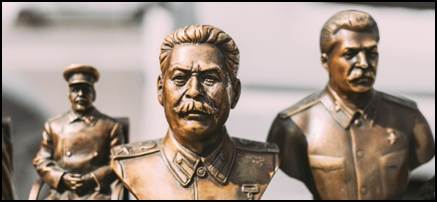
Lied! It’s worse than lying. The party turned the truth upside down. It’s the kolkhozniks who are the serfs. No wonder a farmer here produces ten times as much as a kolkhoznik! No wonder they have to buy from the Americans! Don’t forget that. Don’t forget what you’ve seen with your own eyes, here and there.
The required reading list
It’s fascinating to read these stories. Especially when you consider that Viktor Belenko was more than just a foreigner. A prominent Soviet citizen, he left everything he knew to come to a land he’d been programmed to believe was evil. These powerful anecdotes documenting his experiences show how hard it was for him to break that programming. And perhaps how hard it is for us to break ours.
We’re programmed to take our freedom for granted. Like the air we breathe, it surrounds us so entirely we seldom take note of it. We should love and cherish the liberty we citizens possess in the United States of America. It’s not found in the Union of Soviet Socialist Republics where Belenko came from.
So now you know why MIG Pilot was required reading for our boys growing up. And why I frequently reminded them of MIG Pilot in the most ordinary of experiences. For example, when stopping at a gas station, they might talk me into getting a soft drink (or I might make the offer). I’d remind my son(s) of the wide variety of soft drinks they had to choose from. Of how delicious their choice would be. That I was happy to freely exchange my valuable money at the posted price for the value of the product they chose.

And to point out that so many choices of such quality products were seldom (maybe never) available to people living in Communist / Socialist countries—or any country where the government dominates or plans the economy. Count the blessings of freedom indeed!
All freedoms are one and the same
And I’d like to remind everyone reading this, we’re talking about both personal and economic freedoms here. They’re one and the same. They’re inseparable.
Our personal choices in a free market are made from among products and services that were freely brought to the market.
How did those products and services get there? By the free choices free people make as entrepreneurs and innovators to pursue the benefits the market has to offer. They choose to pursue opportunities and take risks—risks only they assume—for what may be an extraordinary benefit, little or no benefit at all, or complete failure and financial loss.
Of course, monetary profit is the primary benefit—the benefit required to remain in business. However, you and I are in charge of which enterprises profit or fail. We decide this with the products and services we freely and democratically choose to purchase.

But for many, the most significant benefit is using one’s individual, personal talents in a special way. To deliver a worthwhile and desirable product or service that consumers freely choose to buy and make a part of their lives.
And look at the benefit provided to us! All of the extraordinary ordinary products you and I, and every American citizen from any background get to choose from. Products we enjoy and expect, along with frequent new product choices as well.
But…who owns all those cars I see?
The subtitle above is a teaser. An encouragement to read the second part of this writing titled, Extra Credit: A Socialist Teaches Us About Socialism. In it, Belenko reveals the dreadful, grinding Socialist culture he was eventually driven to escape. Slices of everyday life in the USSR that give you even more reason to appreciate our freedoms in the United States. You’ll find these experiences as incredible to you as Belenko’s newfound freedom seemed to him in 1976.
Read it because there’s another take-home from MIG Pilot that’s easy to overlook. It’s the effect of freedom of enterprise on the shared, everyday practices and societal norms of commonplace Americans—our culture.
Of course, our culture extends well beyond having great products at reasonable prices for everyone. We Americans also share opportunity. We share the freedom to pursue our ambitions. The prospect of securing a better future for ourselves and our families.
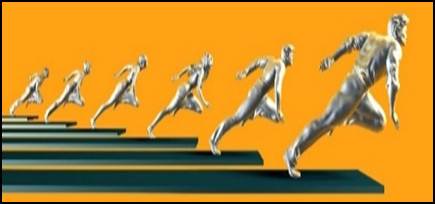
Free enterprise supports upward mobility and prosperity for everyone. And an environment of free and voluntary exchange by its nature cannot exist without peaceful cooperation. Free enterprise promotes all of these attributes.
In America we share opportunity, prosperity, and peace. It’s our culture. But we seldom credit free enterprise for its role in promoting them. We’d notice in a hurry if we lived in Belenko’s Union of Soviet Socialist Republics.
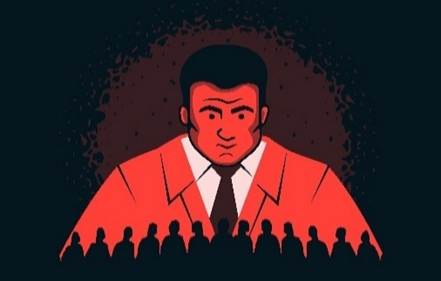
Every day, free enterprise delivers ordinary miracles we barely notice. Notice them. Cherish them. Defend them. Promote economic liberty and vote for politicians who do the same.
God forbid that we should ever lose the freedoms and benefits of free enterprise in the United States of America.
POSTSCRIPT:
Read the Extra Credit and why Viktor Belenko asked, Who owns all those cars I see?

Click below for your EXTRA CREDIT:
A SOCIALIST TEACHES US ABOUT SOCIALISM
https://saltwatertea.org/a-socialist-teaches-us-about-socialism/

